Running a business means protecting staff, stock, equipment, customers, and property. A shop in Kelowna may face different security concerns from a warehouse in Vernon or a construction site near Penticton. The right plan depends on the site, its working hours, and the risks that matter most.
Commercial Security Services in Okanagan can include uniformed guards, mobile patrols, access control, alarm response, and support for busy commercial locations. Each option serves a different purpose. Some businesses need a visible guard at the entrance, while others need checks after closing or help controlling access to restricted areas.
ARC Canada is a brand businesses can consider when reviewing security service options for commercial properties. Before choosing a provider, it helps to understand the available services, the expected costs, and the licensing rules in British Columbia.
What does your property need most: a visible security presence, regular site checks, or a plan that combines several measures? Starting with that question helps you spend your budget on practical protection rather than services your business may not need.
What commercial security can do for Okanagan businesses
Commercial properties face risks that change with their location and daily operations. A retail store may need help managing theft and difficult customer situations. An industrial site may need tighter access controls, equipment checks, and after-hours patrols.
Businesses across Kelowna, West Kelowna, Vernon, Penticton, and surrounding communities can assess their risks by looking at entrances, parking areas, delivery points, storage rooms, and areas with limited visibility.
A security plan can support several goals:
Discourage unauthorised entry and suspicious activity.
Help staff and visitors feel safer.
Check doors, gates, and restricted areas after closing.
Record incidents and pass relevant information to management.
Support emergency procedures and contact the appropriate responders.
A guard cannot prevent every incident. Good results depend on suitable staffing, clear procedures, working security equipment, and communication with the people responsible for the property.
Consider a warehouse that stores tools and machinery overnight. A mobile patrol may suit its needs if the site has several access points and does not require a permanent guard. A retail centre with a busy entrance may benefit more from a guard who can observe activity and assist visitors throughout the day.
Local businesses should assess their actual operating conditions rather than choose a service simply because another property uses it.
Types of commercial security available in the Okanagan
Every property has a different layout, level of public access, and operating schedule. Comparing service options helps you select a plan that fits your needs.
On-site security guards
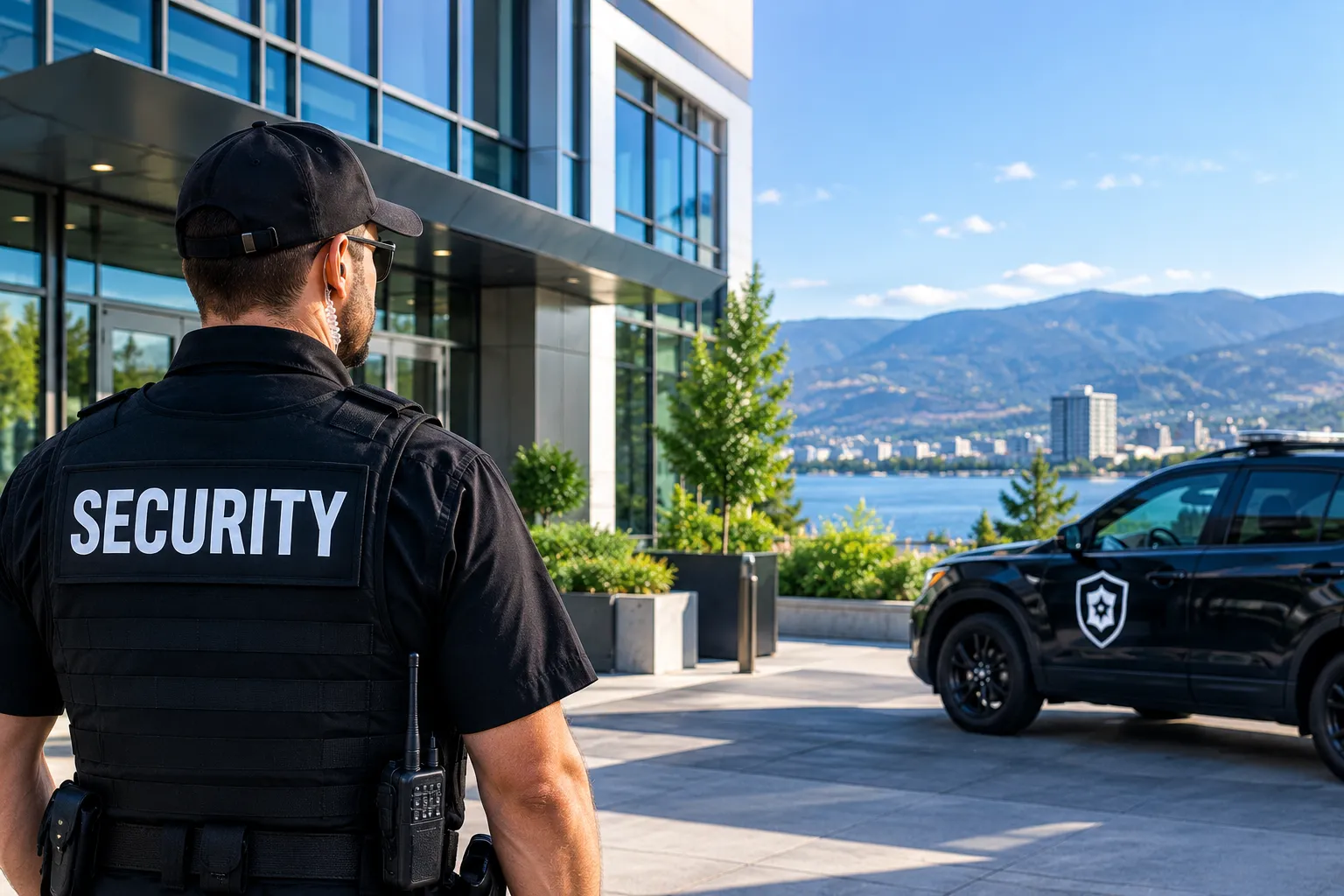
A uniformed guard remains at an assigned location for the agreed shift. Duties may include checking visitors, observing entrances, reporting incidents, and conducting scheduled checks.
This option suits retail properties, office buildings, industrial facilities, and sites that need a regular human presence. The main cost consideration is staffing time, particularly when coverage is required overnight or across several shifts.
Mobile security patrols
Mobile patrol officers visit a property at scheduled or agreed intervals. Depending on the contract, they may check doors, gates, parking areas, and other vulnerable points.
Patrols can suit commercial buildings that close overnight, vacant premises, and construction sites. Their effectiveness depends on the patrol schedule, site layout, and the quality of reporting. A patrol is not the same as continuous on-site coverage.
Access control and visitor management
Access control helps businesses manage who enters a building or restricted area. Procedures may include visitor sign-in, identification checks, access cards, and communication with authorised staff.
This service is useful for offices, warehouses, shared commercial buildings, and facilities with sensitive equipment. Businesses should set clear rules for visitors, deliveries, contractors, and employees who need access outside normal hours.
Alarm response and event security
Alarm response arrangements can help businesses deal with alerts when managers are away. The agreed service may include attending a property, checking for signs of an incident, and contacting emergency services when appropriate.
Event security serves a different purpose. Guards may manage entrances, monitor crowd movement, assist with access rules, and report disturbances at business events or public gatherings.
The service agreement should state which duties are included, how incidents are escalated, and what happens when a guard cannot safely resolve a situation.
Comparing the main options
| Service | Best suited to | Main benefit | Key limitation |
| On-site guards | Retail, offices, busy facilities | Continuous human presence during booked shifts | Higher staffing commitment |
| Mobile patrols | Warehouses, vacant sites, yards | Checks across multiple areas | No continuous presence between visits |
| Access control | Offices, shared buildings, restricted areas | Better control of entry | Depends on clear procedures |
| Alarm response | Closed commercial properties | Support after an alert | Depends on response arrangements |
| Event security | Business events and public gatherings | Entrance and crowd management | Staffing needs vary by event |
These services can work together. A warehouse might use access controls during business hours and mobile patrols overnight. A shopping property might combine on-site guards with clear procedures for reporting incidents.
How a commercial security plan works
A clear process helps a business understand what it is paying for and how the provider will work with its staff.
Review the property. Start by identifying entrances, loading bays, parking areas, storage rooms, and places with limited visibility. Note previous incidents, opening hours, delivery schedules, and any concerns raised by employees.
Assess the risks. Decide which problems need attention first. A business with valuable outdoor equipment may need regular perimeter checks. An office with frequent visitors may need better sign-in procedures and access management.
Select the service. Compare on-site guards, mobile patrols, access control, and alarm response. Specify the hours, locations, tasks, and expected reporting frequency. Ask the provider to explain any limits on the proposed service.
Agree on the procedures. Set out who receives incident reports, when management should be contacted, and how emergency situations should be handled. Confirm the duties guards can perform and when they must contact police or emergency services.
Review performance. Check reports, missed patrols, response records, and recurring concerns. Adjust the plan when the property changes, new risks appear, or the original arrangement no longer fits business operations.
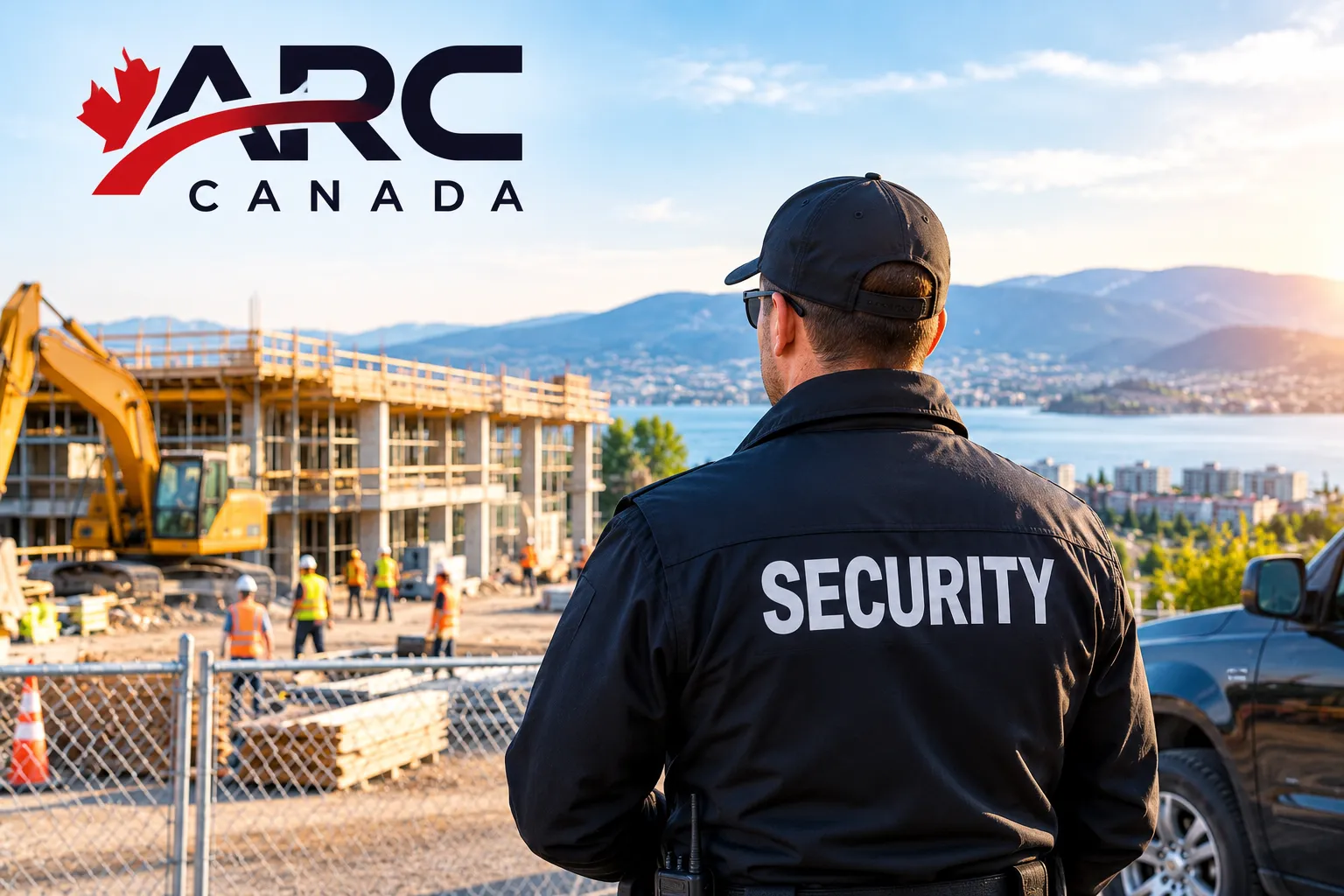
For example, a construction company near Kelowna may have equipment stored on a fenced site overnight. Management could arrange mobile patrols, improve gate security, and keep an inventory of high-value tools. If reports show repeated concerns at one access point, the company can review that area and change its procedures.
This approach gives the business a clear reason for each security measure and a way to judge whether the arrangement remains suitable.
Commercial security costs in Okanagan
Security costs depend on the type of service, coverage hours, site conditions, staffing needs, and contract terms. A short event assignment will have a different price structure from a warehouse that needs overnight coverage every day.
For a broad planning reference, a British Columbia security provider published indicative 2025 rates of approximately 22–35 or more per guard-hour, depending on the service. These are not verified Okanagan-wide rates or a guaranteed quotation. Obtain current written prices before setting your budget.
Government wage figures provide another useful reference, but they are not the same as the amount a client pays a security company. According to Canada’s Job Bank, the November 2025 wage update placed security agent wages in the Thompson–Okanagan region at 18.00–32.00 per hour, with a median of $22.75, based on the stated labour-market reference period. Review the Thompson–Okanagan security agent wage data.
What affects the final quote?
Coverage hours: Longer shifts and overnight coverage increase the total contract cost.
Staffing levels: One guard costs less than a team covering several entrances or areas.
Service type: Static guarding, mobile patrols, event work, and alarm response have different operating requirements.
Site conditions: Remote locations, multiple buildings, and large outdoor areas may require more time and travel.
Contract terms: Short-term assignments, urgent requests, minimum shift lengths, and specialised duties can affect pricing.
When comparing Commercial Security in Okanagan, ask each provider to price the same scope of work. Confirm whether the quote includes supervision, travel, equipment, reporting, taxes, and any minimum booking period.
A low hourly rate may not represent the lowest overall cost if the service leaves important areas uncovered. Ask for a breakdown showing the hours, tasks, and staffing included in the quoted price.
How to choose a security provider locally
Choosing a provider requires more than comparing prices. You need to know who will attend the site, how they will report problems, and whether the business meets the applicable licensing requirements.
British Columbia regulates private security under the Security Services Act and its regulations. The provincial government states that security workers and security businesses generally require the relevant licences unless an exemption applies. You can review the official British Columbia security industry licensing requirements.
Before signing an agreement, ask the provider these questions:
Does the business hold the required security business licence?
Will assigned workers hold the licences required for their duties?
What training and supervision do guards receive?
How are incidents recorded and reported to the client?
What insurance coverage applies to the contract?
Who handles urgent concerns outside regular business hours?
Companies such as ARC Canada can be included in your initial provider enquiries. Compare its proposed service scope, availability, licence details, insurance documentation, and contract terms against other suitable options. Verify any claimed coverage area or service capability directly with the company before relying on it.
A specialist that regularly handles the same type of property may understand its operational demands better than a general service provider. That difference matters only when the provider can show relevant experience, suitable procedures, and clear reporting arrangements.
Look for written answers rather than relying on broad promises. A practical agreement should identify the locations covered, guard duties, service hours, escalation procedures, cancellation terms, and the process for reviewing performance.
Final thoughts
Protecting a commercial property starts with a clear view of its risks, operating hours, and access points. Compare on-site guards, mobile patrols, and access control before deciding which arrangement fits your budget. Check licensing requirements and request written quotations with matching service details. ARC Canada is one company you can contact to ask about available options and request information relevant to your property. A well-defined agreement gives your team a clearer understanding of coverage, responsibilities, and the steps to take when an incident occurs.
FAQs
How much do commercial security services cost in Okanagan?
Costs vary by coverage hours, staffing, location, and service type. A published British Columbia pricing guide listed indicative rates of 22–35 or more per guard-hour in 2025. Request a current Okanagan quotation, since actual contract prices may differ.
What is the most affordable commercial security option in Okanagan?
Mobile patrols may cost less than continuous on-site guarding when a property needs periodic checks rather than a permanent presence. The right choice depends on site size, access points, operating hours, and the level of coverage required.
Do commercial security companies in Okanagan need a licence?
British Columbia generally requires security businesses and security workers to hold the appropriate licences unless an exemption applies. Check the provincial licensing rules and confirm the provider’s status before signing a commercial security contract.
Are mobile patrols suitable for Okanagan warehouses and construction sites?
Mobile patrols can suit warehouses, vacant properties, and construction sites that need scheduled checks. The plan should account for outdoor equipment, access gates, site size, and the time between visits. Patrols do not provide continuous on-site monitoring.
How do I choose commercial security services in Kelowna or Vernon?
Start by listing your main risks, coverage hours, and required duties. Compare written quotes, licence details, insurance, incident reporting, and response procedures. Ask providers to explain how their proposed plan addresses your specific property and operating schedule.