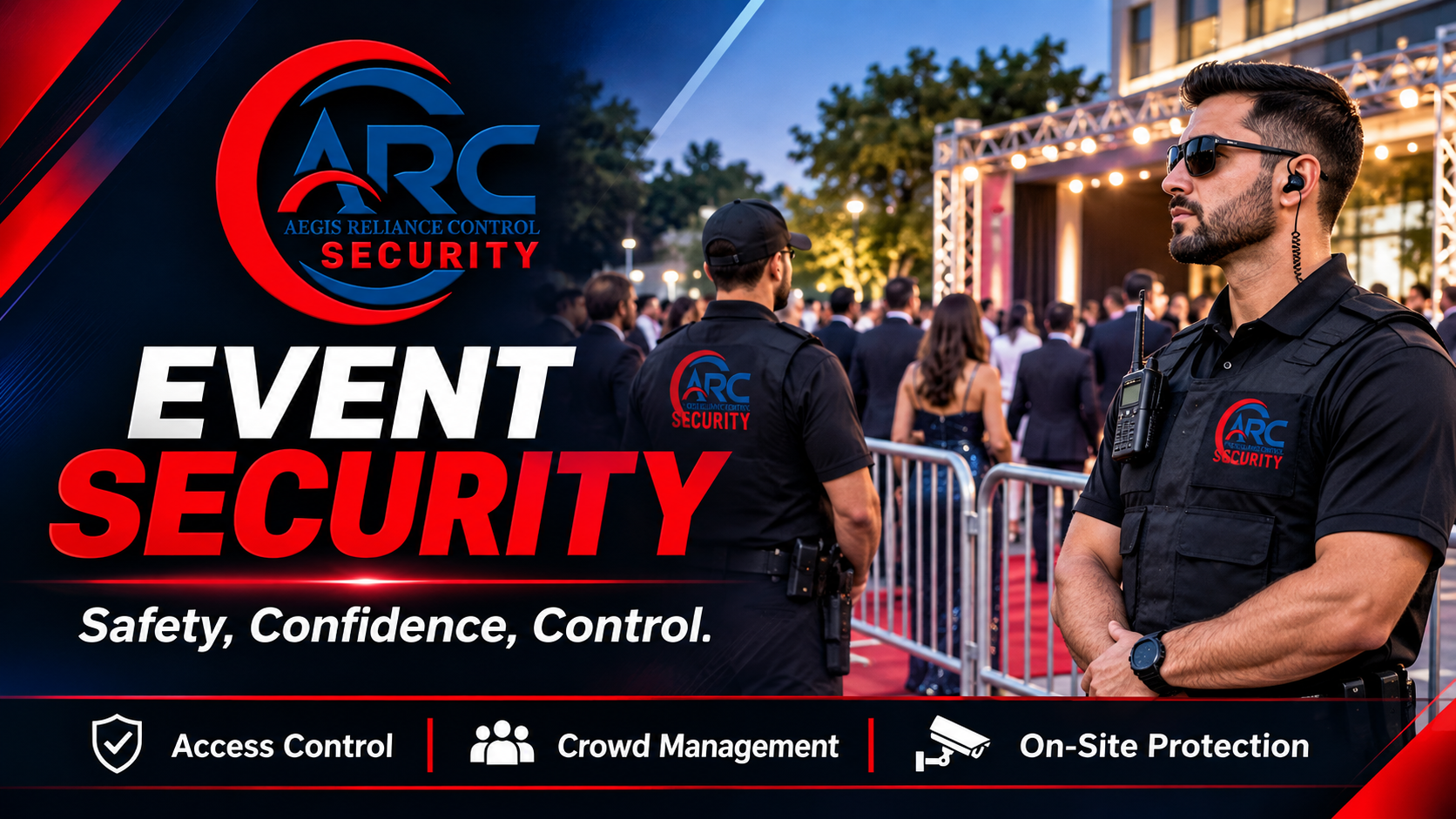
Organising a public or private gathering in Kelowna requires careful planning for guest safety, crowd movement, venue access, and emergency response. Whether the occasion is a wedding, outdoor concert, corporate function, or community festival, appropriate Event Security in Kelowna can help manage risks and maintain an organised environment.
Events in Downtown Kelowna, the Cultural District, Mission, Rutland, and surrounding Okanagan communities attract different audiences and create different security requirements. Venue entrances, parking areas, alcohol service, and crowd behaviour all influence the measures organisers may need.
ARC Canada is a security provider organisers can consider when exploring event protection and staffing options. Before hiring a team, organisers should assess expected attendance, venue layout, event duration, access restrictions, and emergency procedures.
Professional event security may include entrance monitoring, crowd management, mobile patrols, incident reporting, and emergency support. Understanding these services makes it easier to compare providers and develop a plan that considers the needs of guests, performers, employees, contractors, and members of the public.
Why Event Organisers Need Professional Security
Public gatherings bring people together in spaces that may have limited entrances, parking capacity, and emergency exits. Without appropriate planning, overcrowding, unauthorised access, disputes, and confusion during emergencies can create risks for guests and staff.
Security personnel help monitor visitor movement, observe unusual behaviour, and support venue rules. Their presence can also help organisers identify developing concerns and follow established procedures before a minor issue affects a larger part of the event.
Outdoor festivals in Kelowna can attract residents and visitors, particularly during the summer season. Concerts, sporting events, and community celebrations may involve long queues, temporary barriers, multiple entrances, and busy pedestrian areas. These conditions require coordination between organisers, venue management, and security staff.
Planning access arrangements before guests arrive can help prevent congestion. Identifying entrance capacity, queue locations, restricted areas, and emergency exits allows organisers to establish clearer procedures for busy periods.
Private gatherings have different needs. Weddings, birthday parties, and invitation-only functions may require guest-list checks, parking supervision, and discreet monitoring rather than extensive crowd-control measures.
Corporate events may involve confidential presentations, invited speakers, equipment, and restricted meeting areas. Security staff can help direct visitors, verify authorised access where appropriate, and keep designated spaces organised.
Event organisers should also consider provincial licensing requirements. British Columbia regulates security businesses and workers under the Security Services Act. Organisers should verify that the provider and personnel hold the licences required for their duties.
Security planning should complement venue safety procedures, fire protection arrangements, and applicable emergency requirements. Security guards support event safety but do not replace the responsibilities of organisers, venue operators, or public authorities.
Types of Event Security Services Available
Different gatherings need different combinations of security services. A small private function may require entrance monitoring, while a large public festival could need multiple guard positions, regular patrols, and coordinated crowd management.
Entrance security focuses on checking tickets, invitations, identification, and access permissions according to the event’s rules. Guards may direct visitors towards designated entrances and help prevent unauthorised access to restricted areas. Any checks or searches should follow applicable laws and clearly communicated entry conditions.
Crowd management helps organisers monitor queues, pedestrian movement, and congested areas. Security personnel may observe stage approaches, temporary barriers, and gathering points to identify developing crowd pressure and help maintain safe movement.
Mobile patrol services involve officers moving through event grounds, parking areas, and other designated parts of the property. Patrols can help identify unsecured entrances, unattended equipment, and unusual activity away from the main gathering area.
VIP security arrangements may be appropriate for performers, speakers, or invited guests who require controlled access. Depending on the event, duties can include coordinating arrival routes, monitoring restricted spaces, and communicating with event management.
Parking supervision can help direct vehicles within private event property and keep designated access routes clear. Organisers should distinguish these duties from public-road traffic control, which may require separate authorisation or arrangements.
Emergency support involves communicating incidents, helping direct guests towards designated exits, and coordinating with emergency responders when appropriate. Security personnel should understand the venue’s evacuation procedures and the communication methods used during an incident.
A suitable Event Security in Kelowna plan may combine entrance checks, patrols, and crowd monitoring. The exact services should reflect expected attendance, venue size, event duration, and the risks identified during planning.
Organisers comparing Event Security Guards in Kelowna should ask about staff training, supervision, incident reporting, and experience with similar gatherings. Staffing levels should be based on a documented assessment of the event rather than a fixed assumption that applies to every venue.
How Event Security Planning Works
Effective planning begins with gathering essential event information. Organisers should establish the venue, expected attendance, operating schedule, planned activities, alcohol arrangements, and any factors that may influence visitor movement.
The next step is to review the venue layout. Entrances, emergency exits, washrooms, parking areas, performance spaces, and restricted sections should be identified on an event plan. This helps organisers decide where security staff are needed and which routes must remain accessible.
A security provider can then assess potential risks and recommend appropriate staffing positions. A larger gathering may need separate personnel for entrance checks, patrols, restricted areas, and communication with event management.
Before the event begins, staff should receive clear instructions covering their responsibilities, access rules, prohibited items, emergency contacts, reporting procedures, and communication channels. Briefings should also explain how to handle unexpected situations and when to request assistance.
Guest entry procedures should be straightforward and consistent. Ticket checks, wristbands, identification checks, and bag inspections should follow applicable requirements and the event’s published conditions of entry.
During the gathering, supervisors can coordinate staff positions and respond to developing concerns. Radio communication or another agreed system can help personnel share information about congestion, disputes, suspicious activity, or access problems.
If a visitor becomes aggressive near an entrance, trained personnel should follow lawful de-escalation procedures, protect nearby guests, and seek police assistance when necessary. Staff should understand the limits of their authority and avoid actions that could unnecessarily escalate a situation.
Incident records help organisers document security concerns. Depending on the circumstances, reports may include the time, location, observations, and actions taken. Personal information and recorded material should be handled in accordance with applicable privacy requirements.
Consider an outdoor music gathering near Kelowna’s waterfront. Organisers might arrange ticket checks at the main entrance, patrols near equipment storage, and staff monitoring movement around the performance area. The final arrangement would depend on the actual venue layout and assessed risks.
Weather conditions should also be included in the plan. Summer heat, wildfire smoke, rain, and strong winds can affect outdoor gatherings. Organisers should establish communication procedures and contingency arrangements for changing conditions, including the possibility of delaying, relocating, or evacuating an event.
After the gathering, a security review can identify problems with entry procedures, staff positioning, communication, or incident handling. These findings can help improve arrangements for future events.
Event Security Costs in Kelowna
Event security costs depend on the length of the gathering, staffing levels, operating hours, location, and duties assigned to each guard. A small private function may require relatively few staff hours, while a large festival can need several personnel working simultaneously.
For preliminary budgeting, organisers might use an illustrative estimate of CAD 25–45 per guard hour. This is a planning example, not a verified average for the Kelowna market. Actual quotations can vary according to provider rates, staffing requirements, supervision, and event conditions.
Specialised assignments may cost more if they require additional training, detailed planning, or extra supervision. Events with several entrances, restricted zones, or large outdoor areas may also need more staff than gatherings held in a compact venue.
For example, four guards working an eight-hour event at an assumed rate of CAD 35 per hour would produce a basic staffing cost of CAD 1,120. This calculation excludes potential taxes, travel, equipment, supervision, and other contract charges.
Venue size can influence the final quotation. Events spread across several buildings or outdoor sections may require additional patrols, separate access points, and more coordination between staff.
Alcohol service may create additional responsibilities involving age verification, entry restrictions, and responding to intoxicated or disruptive guests. Organisers should confirm applicable liquor licence conditions and the venue’s procedures before finalising the staffing plan.
Choosing a provider solely because of a low hourly rate can lead to inadequate coverage if the event has multiple entrances or complex crowd movement. Comparing the proposed staffing plan and responsibilities provides a clearer basis for evaluating value.
Providers may also set minimum booking periods. Evening shifts, holiday schedules, remote venues, and last-minute changes can affect the total cost.
Organisers should request a written estimate that explains the number of guards, shift lengths, supervision arrangements, equipment, reporting requirements, and possible additional charges. The quotation should also identify how overtime or changes to the event schedule will be handled.
The final budget should reflect the event’s assessed risks and operational requirements. Planning costs in advance helps organisers allocate resources while maintaining suitable security coverage.
How to Choose an Event Security Provider
Selecting a provider starts with checking its business information and licensing status. British Columbia has licensing requirements for qualifying security businesses and workers, so organisers should verify the relevant authorisations before signing an agreement.
Experience with the planned event type is another useful consideration. A provider familiar with private weddings may have different operating procedures from one experienced in concerts, festivals, or large corporate gatherings.
Ask how personnel are trained in communication, conflict management, crowd observation, and incident reporting. Guards should understand their legal responsibilities, the limits of their authority, and the procedures for contacting emergency services.
Companies such as ARC Canada can be considered when comparing event-focused security services with general property monitoring. Organisers should evaluate the proposed staffing arrangements, relevant experience, supervision, communication methods, and written security plan rather than relying on general claims alone.
A suitable provider should explain how staff positions will be assigned and how personnel will coordinate during the gathering. Entrance monitoring, patrol routes, restricted-access areas, and emergency communication procedures should be discussed before the event begins.
Insurance and contractual responsibilities also deserve attention. Organisers should request information about relevant liability coverage and review the agreement to understand the responsibilities and limitations of each party.
Customer feedback can provide additional information about punctuality, staff conduct, communication, and incident reporting. Reviews describing similar events may be more useful than general ratings without supporting details.
Coordination with venue management and other contractors is essential. Security procedures may affect catering deliveries, performer access, ticketing, equipment setup, and emergency routes. All relevant teams should understand the agreed arrangements.
Before confirming a booking, review cancellation terms, payment conditions, minimum hours, and overtime charges. A written agreement should clearly describe the services, staffing commitments, and procedures for requesting changes.
Conclusion
Successful event security depends on preparation, clear communication, and measures that match the gathering’s size, venue, and activities. Entrance monitoring, crowd management, mobile patrols, and emergency procedures can help organisers address common risks and maintain an orderly environment.
When comparing Event Security in Kelowna, organisers should review licensing, staffing plans, relevant experience, and written service costs. A practical approach to security planning can help protect guests, support venue operations, and prepare teams to respond to unexpected situations.
FAQs
How much does Event Security in Kelowna cost per hour?
For preliminary budgeting, organisers might estimate CAD 25–45 per guard hour, depending on duties, staffing, and event conditions. This is an illustrative range, not a verified local average. Request written quotations covering minimum hours, supervision, equipment, and additional charges.
How many Event Security Guards in Kelowna are needed for a festival?
Staffing depends on attendance, venue layout, entry points, alcohol service, and identified risks. There is no single guard-to-guest ratio suitable for every gathering. A security assessment can help determine appropriate coverage and identify relevant permit or venue requirements.
Do event security companies in Kelowna need provincial licences?
British Columbia regulates security businesses and workers under the Security Services Act. Qualifying providers and personnel must hold the licences required for their activities. Organisers should verify the relevant credentials and review applicable venue rules and event requirements before hiring security staff.
How does Kelowna’s summer weather affect outdoor event security?
Heat, wildfire smoke, rain, and strong winds can affect guest comfort and event operations. Security plans should include communication procedures, accessible routes, and contingency arrangements. Organisers should monitor conditions and coordinate safety decisions with venue management and relevant authorities.
What services are included in Event Security in Kelowna?
Services may include entrance checks, crowd monitoring, mobile patrols, restricted-access control, and incident reporting. The arrangement depends on the event’s size and venue requirements. Confirm guard duties, supervision, emergency procedures, and reporting expectations in a written service agreement.