Most owners think about security only after a bad night. A walkout, a fight on the patio, or a scare at the cash office changes that fast. Security teams such as ARC Canada get calls the morning after, when the damage is done. Good restaurant security works best when you plan it before trouble starts.
We wrote this guide for owners and managers of cafés, pubs, and full-service restaurants across Canada. We added notes for readers in the US, UK, Australia, New Zealand, Ireland, and South Africa. You will see the main security options, a cost comparison, the steps a provider follows, pricing factors, and tips for choosing a partner. Where do most risks start? Usually at the door, the till, and the car park.
Rules differ by province and country, so treat this as a planning guide and not legal or safety advice. Confirm local licensing and privacy rules before you act.
Why hospitality security needs its own plan
A restaurant is a hard place to protect. The doors stay open, cash moves all night, and alcohol raises tempers. Staff often close alone.
Crime numbers show why owners pay attention. Statistics Canada reported in 2023 that the national Crime Severity Index rose 5 percent in 2022. Margins leave little room for loss, since Restaurants Canada (2023) data points to pre-tax profits of roughly 4 to 5 percent. One theft, one broken window, or one bad review can erase a week of earnings.
Rules shape your plan too. In British Columbia, the Security Services Act requires guards and security businesses to hold provincial licences. WorkSafeBC expects employers to assess violence risks and train workers. Licensed premises also answer to the Liquor and Cannabis Regulation Branch, and servers need Serving It Right training.
Take a 60-seat grill in Surrey, BC, with a busy Friday patio. Walkouts doubled over one summer, and a shouting match scared two tables away. The owner added one door guard on weekend nights, a camera over the till, and a written seating policy. Walkouts dropped sharply by the next month.
A licensed security consultant in Vancouver would tell you that most incidents grow from small things left alone, like a loud group refused service with no plan for what comes next. That is why restaurant security works best as a written plan, not a shopping list of gadgets.
Security guards, CCTV, and alarms: what each layer does
Layers beat single fixes. A camera records trouble but cannot stop it. A guard can step in, but cannot watch every corner at 2 a.m. Most venues do best with two or three layers working together.
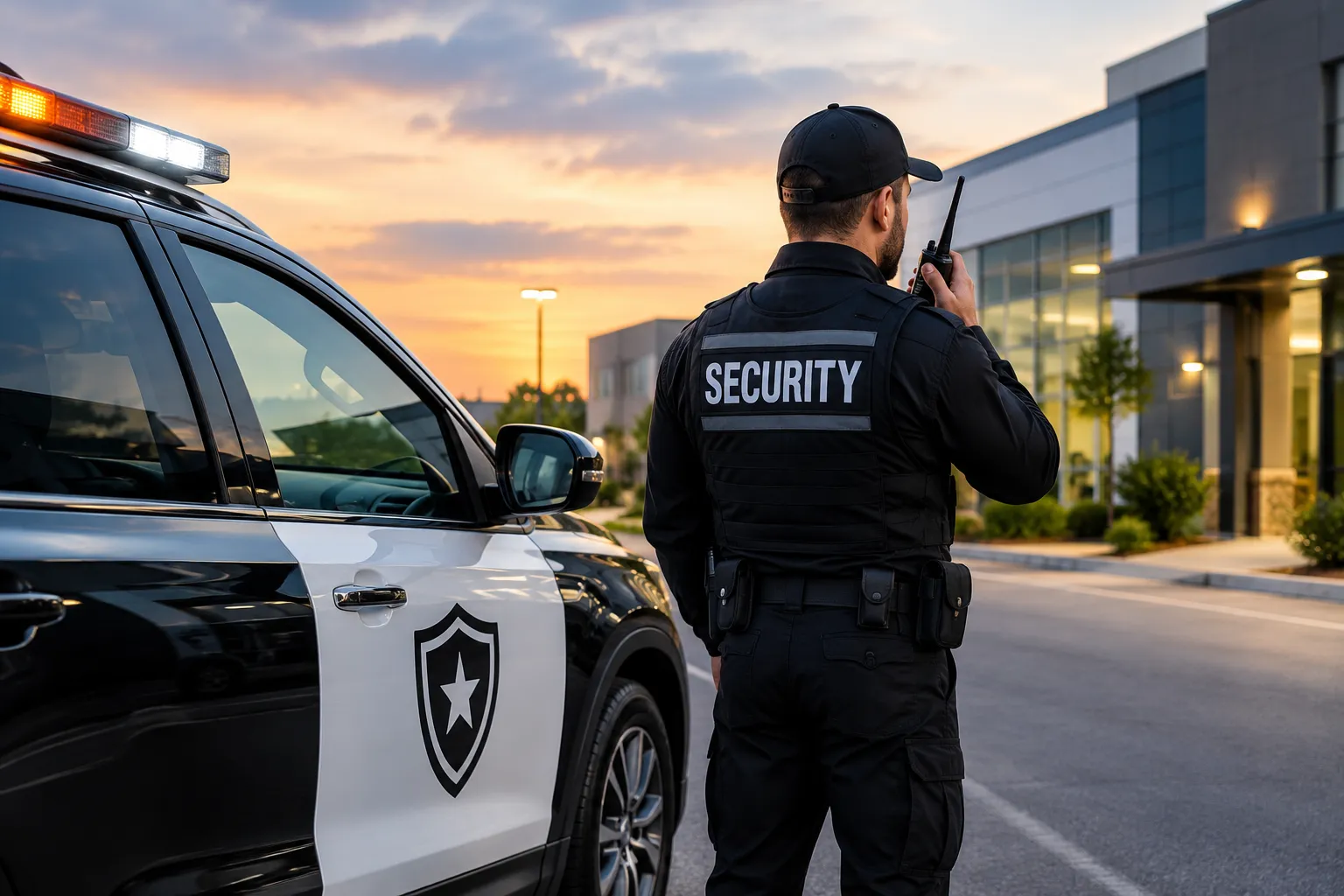
Uniformed door and floor guards deter trouble, check ID, count capacity, and handle unruly patrons. They suit late nights, patios, and events. The cost is hourly, so a long shift adds up fast.
Mobile patrol suits closing checks and overnight visits to empty premises. CCTV with remote monitoring gives you evidence and watches the back door. Under BC’s Personal Information Protection Act, you should post clear signs and keep footage only as long as you need it. Restaurant security cameras for a small business now start well under $4,000 for a four-camera set.
Alarms and access control protect the cash office and kitchen entry. Staff must use them every night, or the system fails. Which layers fit your venue? A quiet café needs less than a late-night pub, so match the mix to your busiest hour.
| Option | Typical cost (CAD) | Best for | Limits |
| Uniformed guard | 35–55 per hour | Door, patio, late nights | Cost grows with shift length |
| Mobile patrol | 20–60 per visit | Closing checks, overnight | Not on site during an incident |
| CCTV with monitoring | 1,500–4,000 install, 50–300 monthly | Evidence, theft, back door | Records, does not intervene |
| Alarm and access control | 1,000–3,000 install, 30–70 monthly | Cash office, kitchen entry | Needs daily staff habits |
These are rough estimates. Your quote will vary with city, venue size, and contract length.
From site assessment to daily protocols and pricing
Providers follow a repeatable process, and you can check each step.
Six setup steps
- Walk the venue at opening, peak time, and closing.
- Check risks at the entrance, patio, till, back door, and car park.
- Write post orders, which are the guard’s duties for ID checks, capacity counts, refusals, and escalation.
- Set guard hours around your busiest nights and events.
- Brief your staff and agree who the guard calls first.
- Review incident reports each month and adjust hours.
Good providers put these steps in writing. Ask to see a sample post order before you sign.
What shapes the price
Hourly rate leads the price. Licensed guards in Canada often bill $35 to $55 an hour, based on the city, the shift, and the contract. Night, holiday, and short-notice shifts cost more. Many companies set a four-hour minimum per shift.
Take one guard on two eight-hour weekend nights. That is 16 hours a week, or about $640 at $40 an hour. Two guards double the bill. Does the cost sound high? Compare it with one lost night of sales, one damaged patio, or one insurance claim.
Camera systems add hardware, storage, and optional monitoring. A four-camera system often costs $1,500 to $4,000 installed, plus $50 to $300 a month for cloud storage or monitoring. Contract length matters too, so ask what happens if you want to cancel.
How to choose a guard company in your area
Price is only one line on a quote. Start by asking how the company handles a bad night, then check the paperwork.
Ask each provider these questions:
- Is the company and every guard licensed under the Security Services Act in BC, or the matching law in your province?
- Can you show written post orders and a sample incident report?
- How fast can you send cover when a guard calls in sick?
- Do your guards train for hospitality, including de-escalation and intoxicated patrons?
- Will you work within my house rules and policies?
- What are the minimum shift, notice period, and cancellation terms?
A provider that focuses on hospitality, like ARC Canada, tends to know restaurant shift patterns and house policies. Its site describes guards trained in restaurant protocols such as theft prevention and handling unruly patrons. It also lists CCTV supply, free consultations, and a willingness to work inside a client’s existing policies from its base in British Columbia. A national chain may field a bigger roster but can be less flexible on your house rules.
Frequently asked questions
What is restaurant security and wath does it cover?
Restaurant security covers the people, tools, and rules that protect guests, staff, cash, and stock. It includes door and floor guards, CCTV, alarms, cash-handling routines, and written plans for incidents. Good restaurant security also covers closing procedures, so staff never walk to the car park alone at night.
How much does restaurant security cost in Canada?
Licensed guards in Canada often bill between $35 and $55 per hour, depending on the city, shift time, and contract. A four-camera CCTV system may cost $1,500 to $4,000 installed. Ask for a written quote showing minimum shift lengths and holiday rates. Costs change by province, so treat these as rough ranges.
Do I need licensed guards for restaurant security in British Columbia?
Yes. BC’s Security Services Act requires security workers and security businesses to hold provincial licences. Ask to see licence numbers and check them with the province. Hiring an unlicensed guard can create legal and insurance problems. Confirm current requirements with the BC government before you sign a contract.
How much does a guard cost for Friday and Saturday nights?
One guard working two eight-hour weekend nights is 16 hours. At $40 an hour, that is about $640 per week before taxes. Two guards double it. Many companies set a four-hour minimum per shift, and holidays can cost more. Ask for a seasonal quote if you run a patio.
Are CCTV cameras allowed inside a restaurant in Canada?
Yes, with limits. In BC, the Personal Information Protection Act expects private businesses to post clear signs and use video for a stated purpose. Keep cameras out of washrooms and change rooms. Store footage safely and delete it after a set period. Other provinces and countries have their own privacy laws.
How do I handle unruly or intoxicated patrons in Vancouver?
Train staff to stay calm, refuse service early, and offer a way out such as a taxi. Licensed premises in BC must not serve people who show signs of intoxication, and Serving It Right training covers this. A trained guard at the door can step in so servers never face it alone. Call police if anyone threatens safety.
What should a restaurant security plan include?
Write down opening and closing routines, cash handling, door checks, patio rules, and an incident chain of command. Add a camera map and a contact list for your guard company, manager, and police non-emergency line. Review the plan every quarter and after any incident. Share it with new hires on day one.
Do outdoor cameras survive wet or cold Canadian weather?
Pick cameras with a weather rating of IP66 or higher for rain, snow, and spray. In coastal BC, damp air corrodes cheap mounts, so ask for stainless or coated hardware. In cold regions, check the temperature range on the spec sheet. Clean lenses monthly, and test night vision after storms.
Can guards help prevent dine-and-dash and theft?
Yes, mostly through presence and routine. A guard near the exit, a clear seating plan, and prepayment on busy nights cut walkouts. Cameras at the till and back door help with staff and stock theft. Guards have limited legal powers, so agree in advance on when to call police.
How long does it take to start a guard service?
Many providers can start within days after a site walk-through, once post orders and shift times are agreed. Larger contracts and special events may need more notice. Ask about replacement cover for sick days, because a missed shift leaves your busiest night uncovered.
Your next step is small. Walk your venue at opening and closing, list your three biggest risks, and set a monthly budget. Then ask two or three providers for a site walk-through and a written quote. If you want a team that already works in hospitality, contact ARC Canada for a free consultation and ask how guards and CCTV could fit your venue. Check your provincial licensing and privacy rules first, and keep your staff in the loop. Safe nights come from calm planning, not panic.